Cerebral Palsey Nepal
Closed project
Our local partner
Self-Help Group for Cerebral Palsy, Nepal (SGCP) is a non-governmental organization, established in 1986 and dedicated to supporting people with cerebral palsy and their families.
A complete rehabilitation service for children with cerebral palsy and their parents, as well as a school and vocational training centre, and a residential programme (Phulbari and Tusa) for families living outside of the Kathmandu Valley, is being run from their specialist centre in Dhapakhel, Lalitpur
Their additionnal community programmes help to reach many more children in need unable to visit the centre. Through home visitors, care centres, medical camps and other initiatives, over 1400 individuals and families in 19 of Nepal’s 75 districts are getting support.
Objectives
Providing children and adults with cerebral palsy with therapeutic and medical intervention, education and practical assistance so that they may live happy, fulfilled and independent lives as far as possible.
Empowering families with the resources they need to best support and care for their child.
How do we do it
A. at home : home visitor
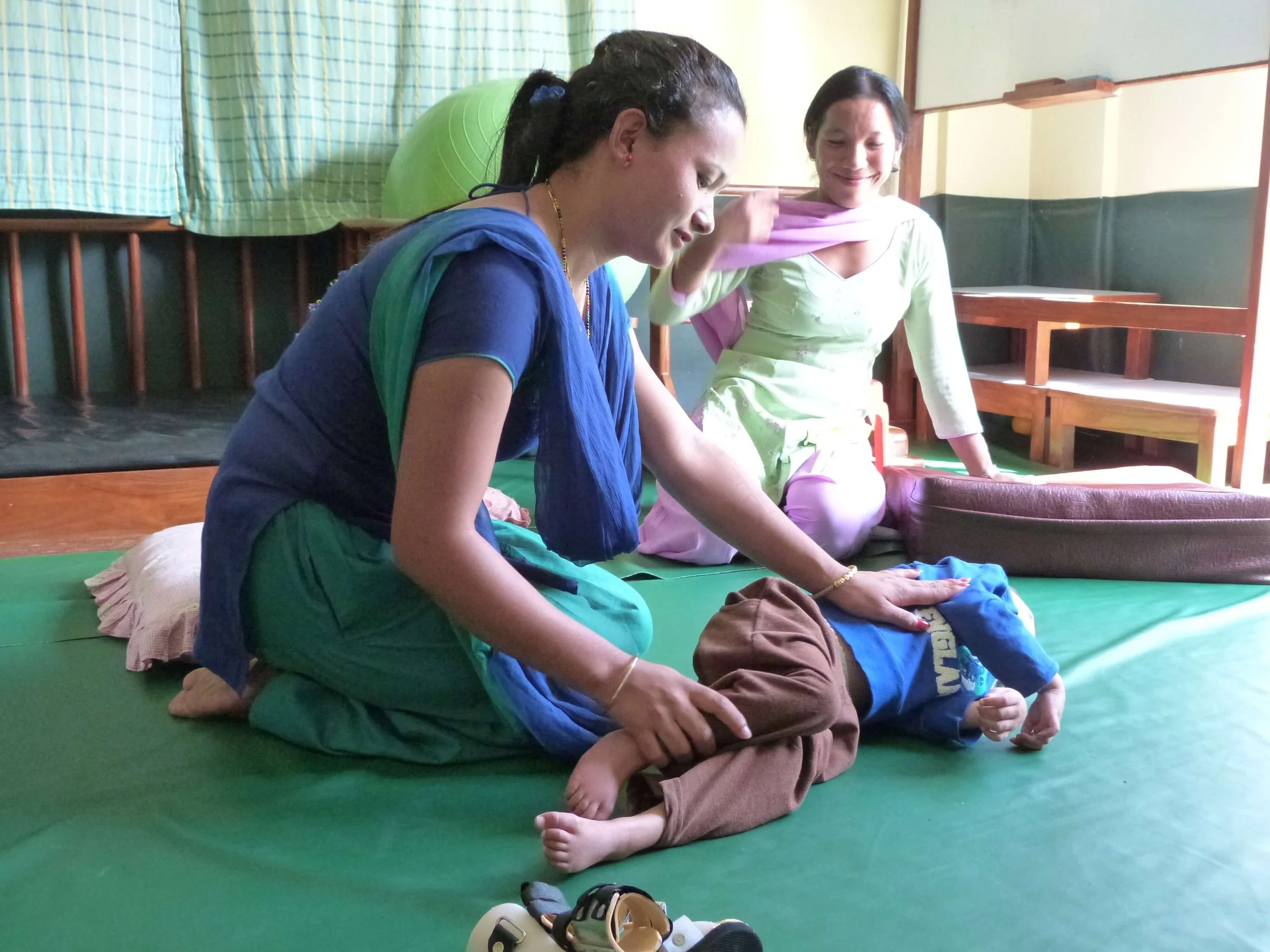
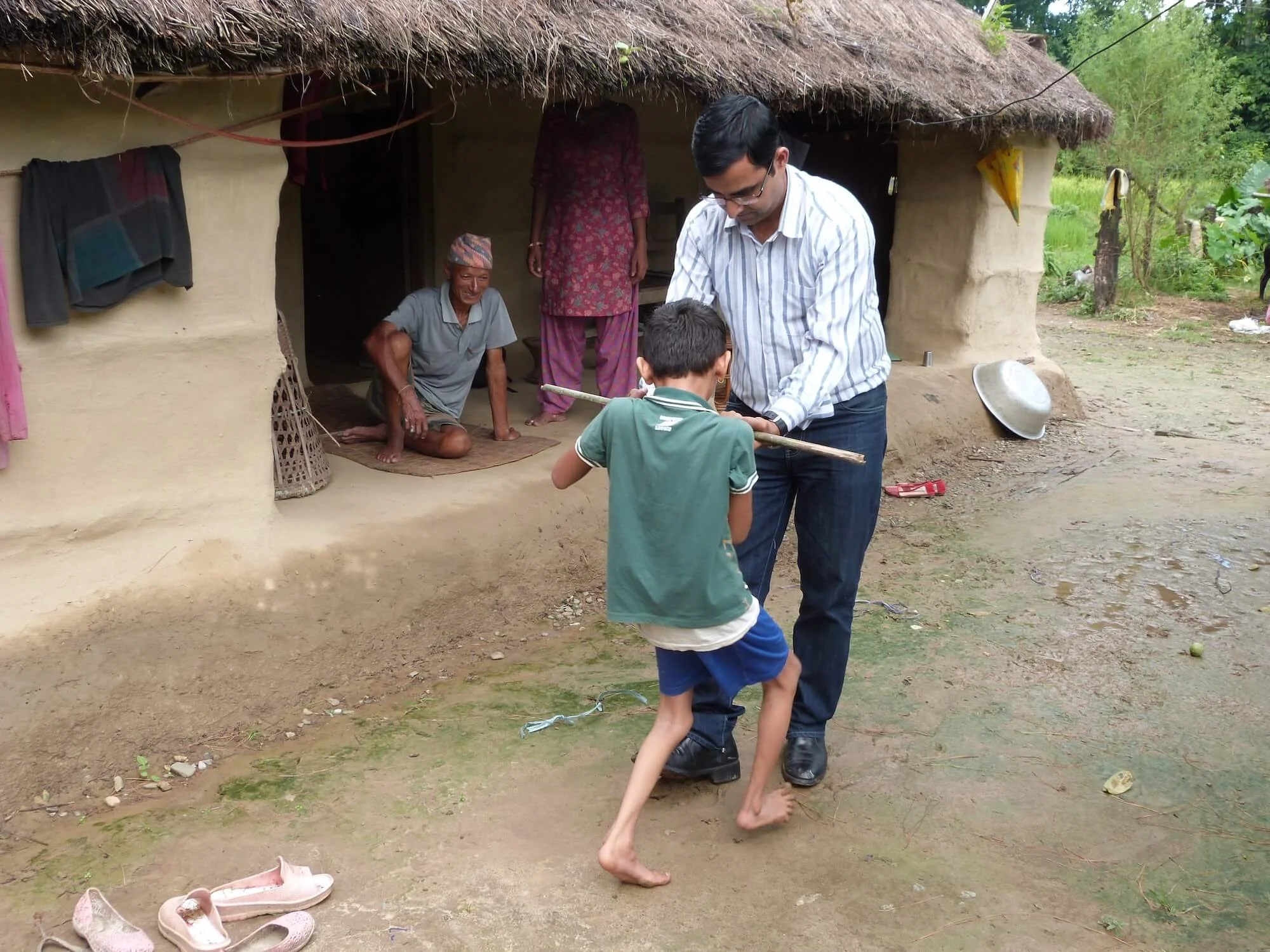
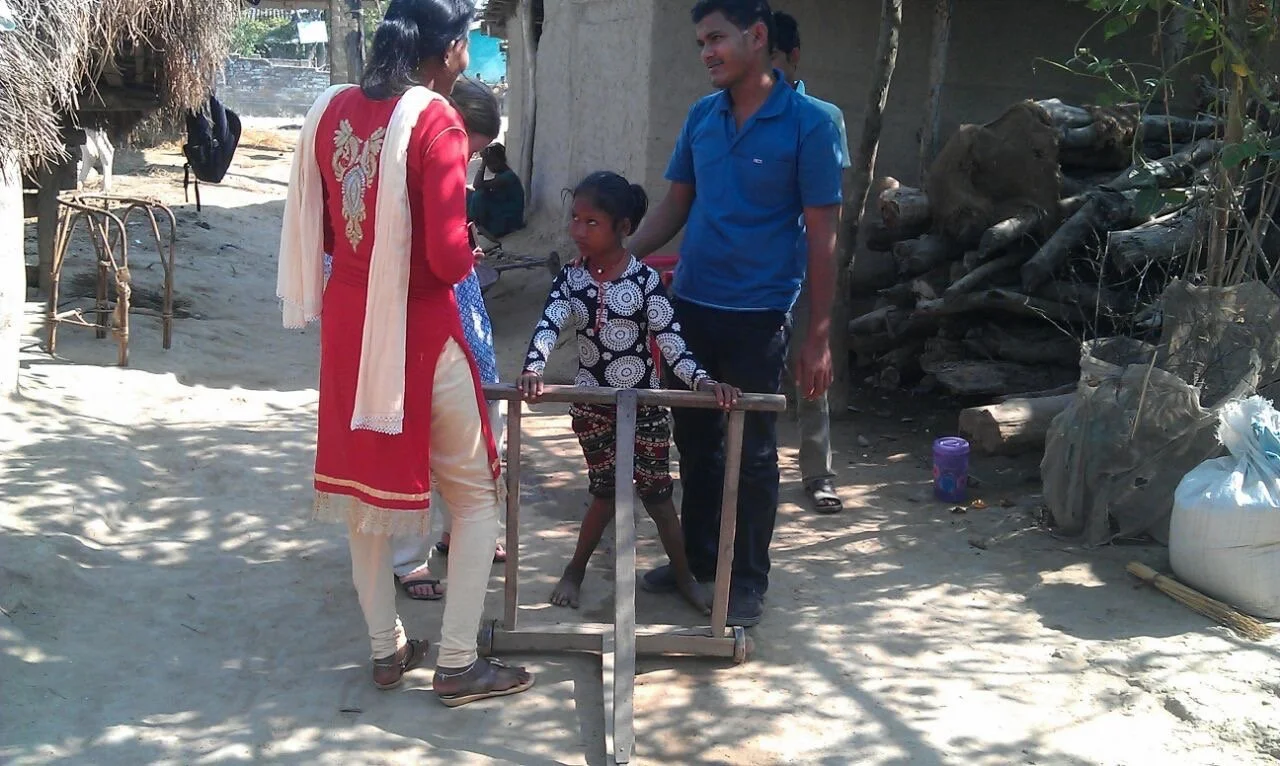
Trained home visitors provide therapy, practical guidance and emotional support to children with cerebral palsy and their families.
They carry out therapeutic exercises with the child during home visits, but also train parents in carrying them out. The exercises may focus on the child’s communication skills, ADL (activities of daily life) or physical intervention. In this way, the programme supports the independence of children and their parents.
We support home visitors in several districts
B. In community schools : day care center
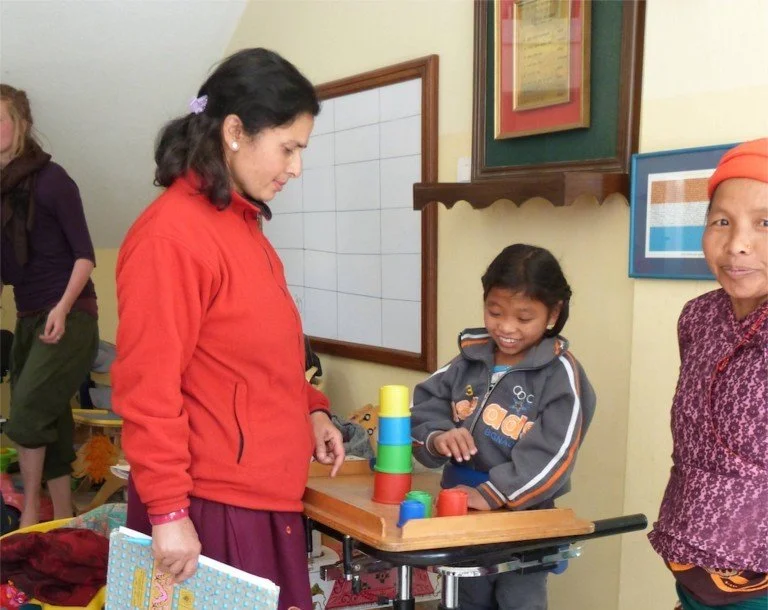
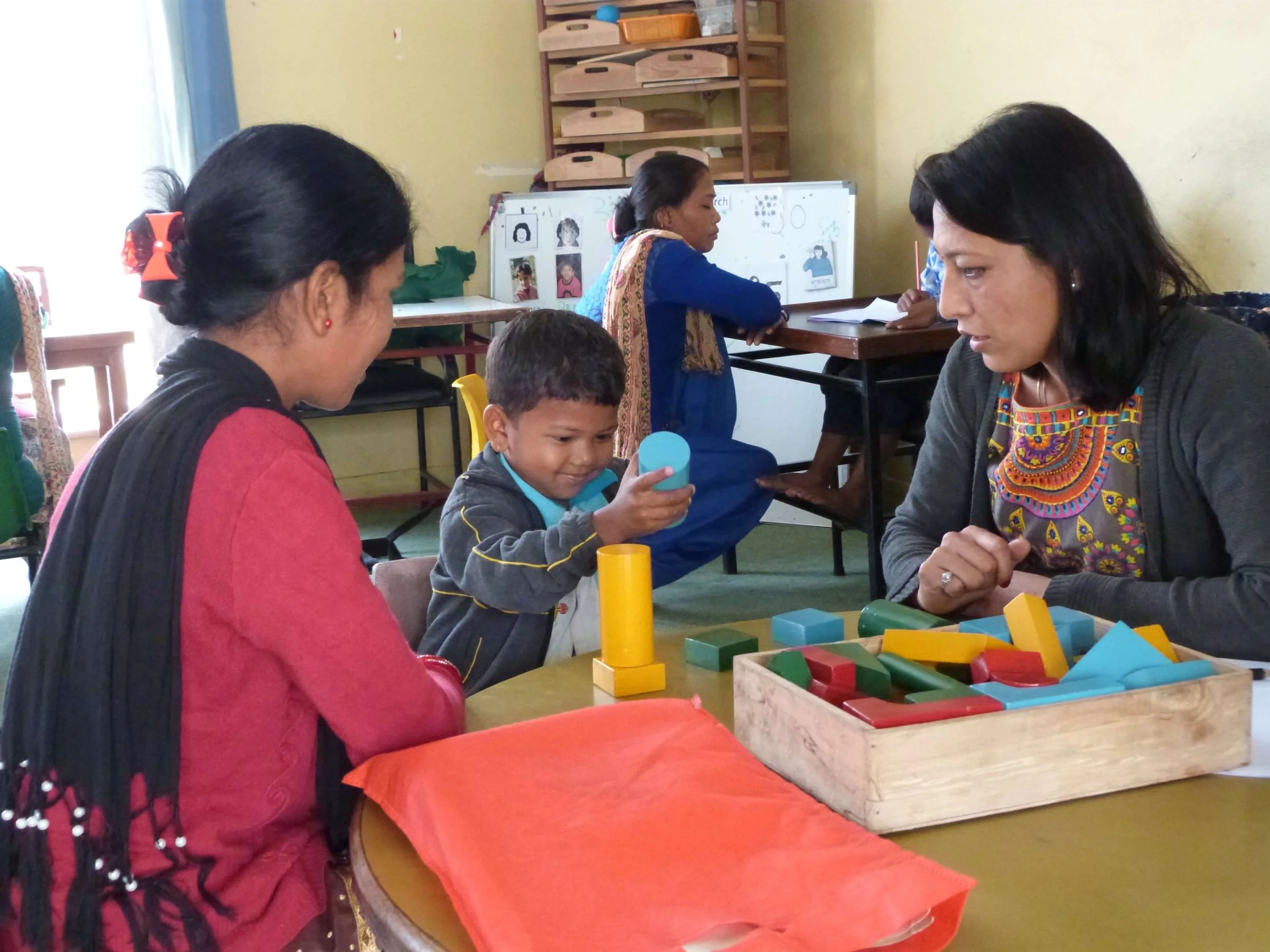
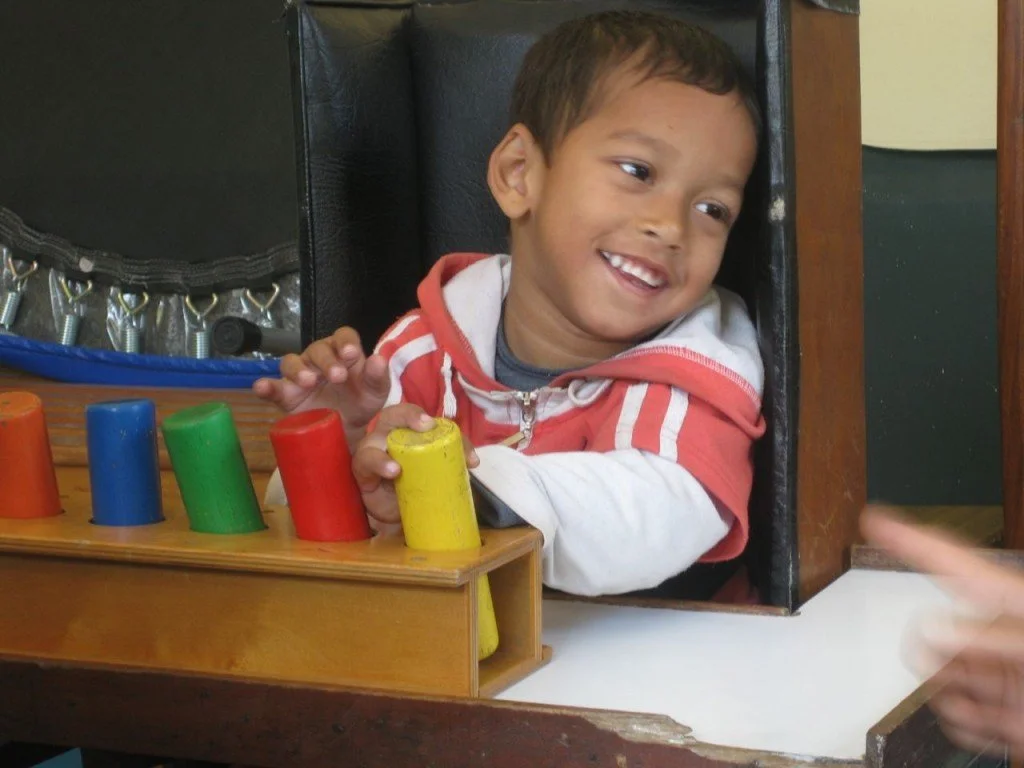
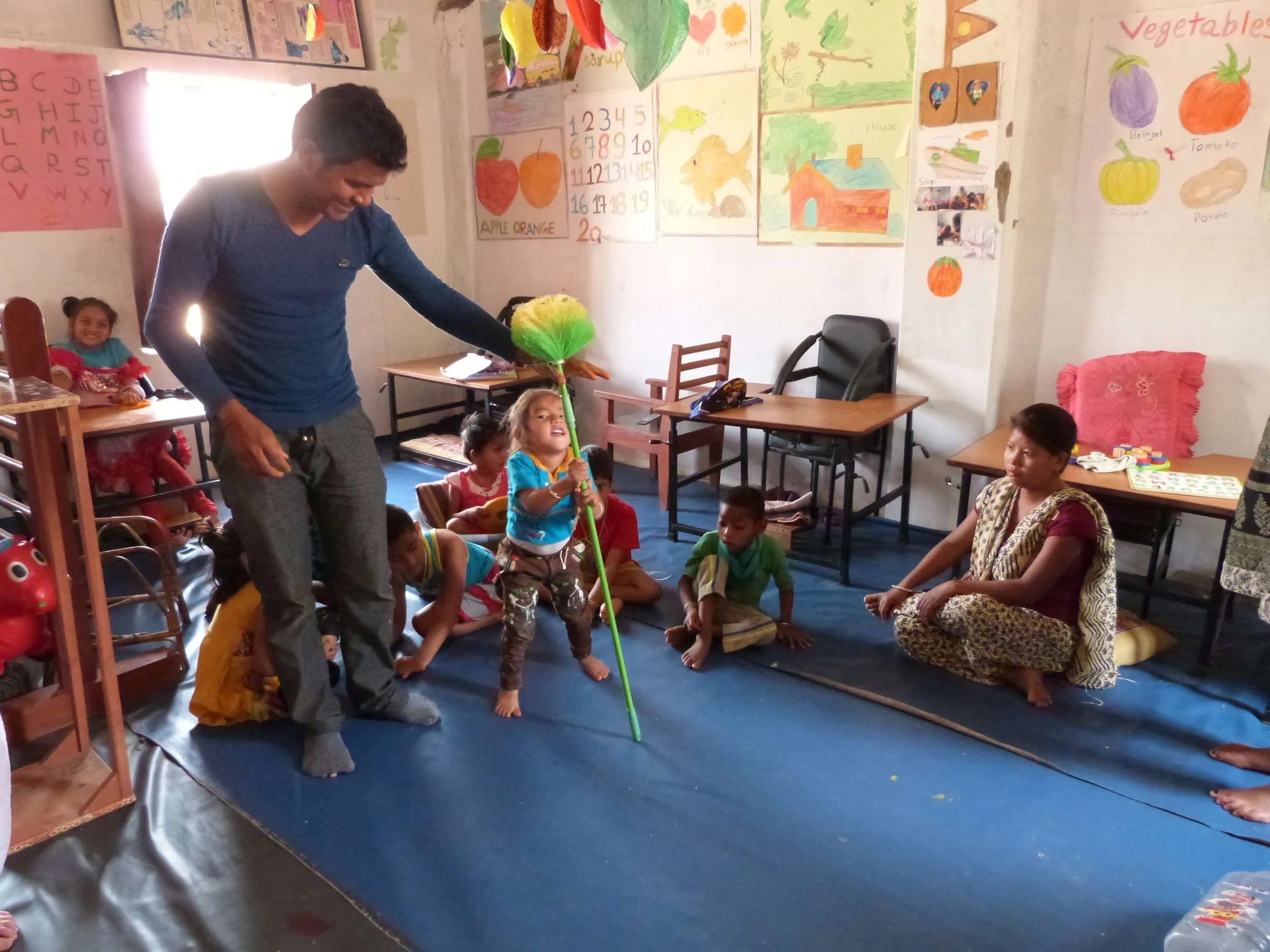
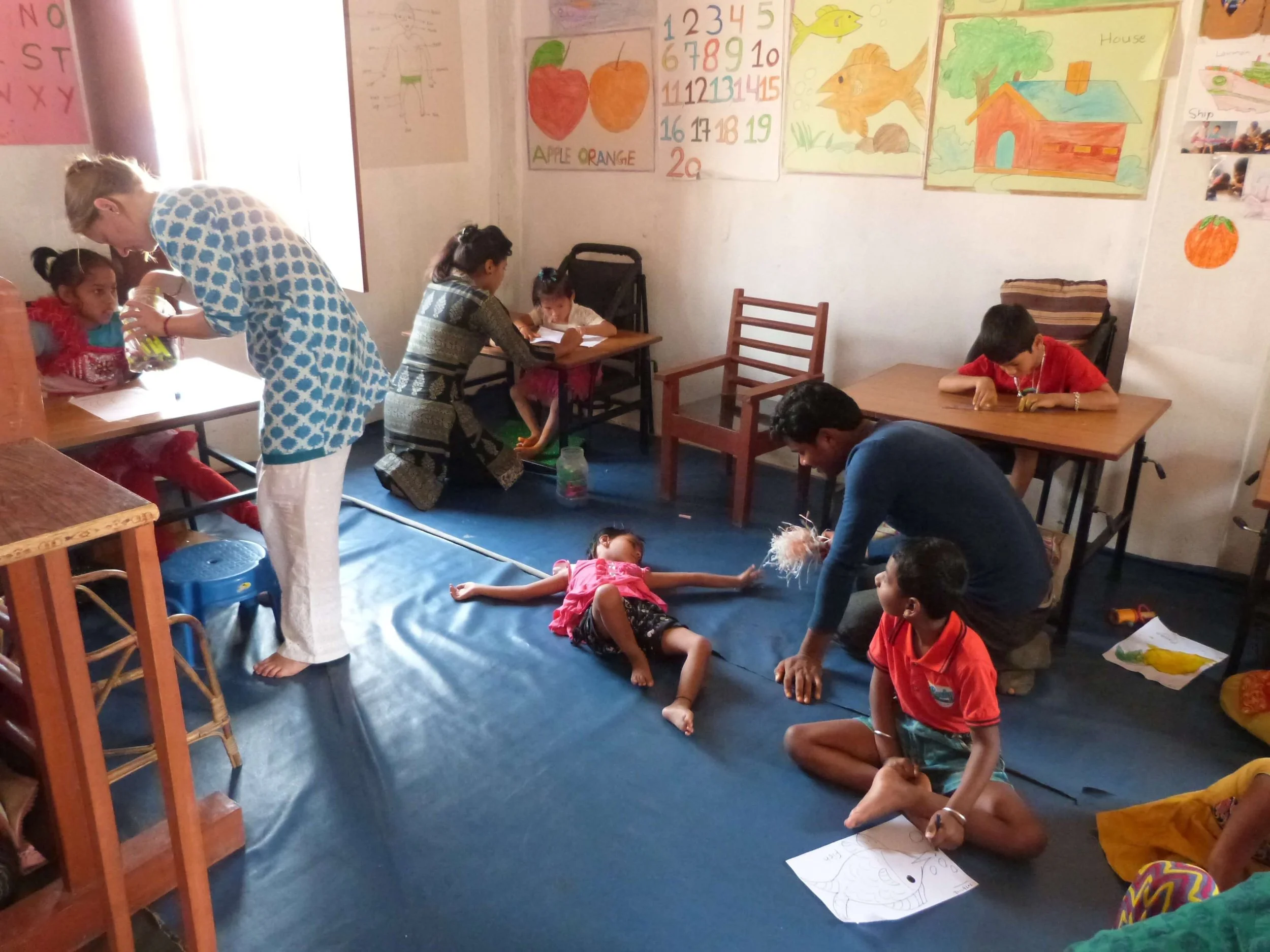
Economically, many families with children with cerebral palsy face a dual problem: not only is paying for treatment and support costly, but often parents must take time off from work to care for the child, affecting the family’s income. Daycare centres ensure parents are able to work during the day, whilst providing the child with the therapy and education essential to their development. Daycare centres teach children ‘Activities for Daily Living’ such as eating, washing, toilet-training. They are also provided with basic education. Parents groups and the community are essential to the running of daycare centres, with often mothers taking active roles. Together with SGCP we established and support several day care centres.
C. Residential Programmes: Phulbari (children from 5-14 years) and Tusa (early intervention 0-4 years)
Phulbari and Tusa are intensive one month-long residential programmes, that provide children and parents with the skills they need to achieve greater independence and quality of life once they return to their community. Together with SGCP we started, completely support and are directly involved in these programmes. Phulbari and Tusa deliver holistic medical, therapeutic and education training to :
1. Children
are assessed medically and psychologically,
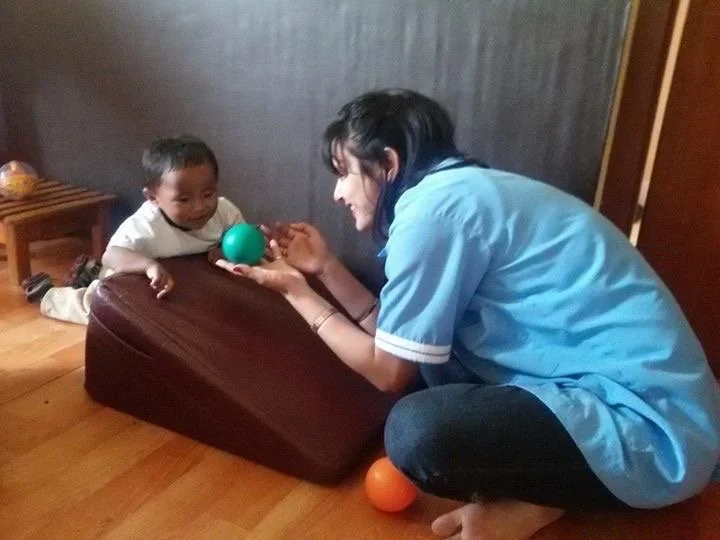
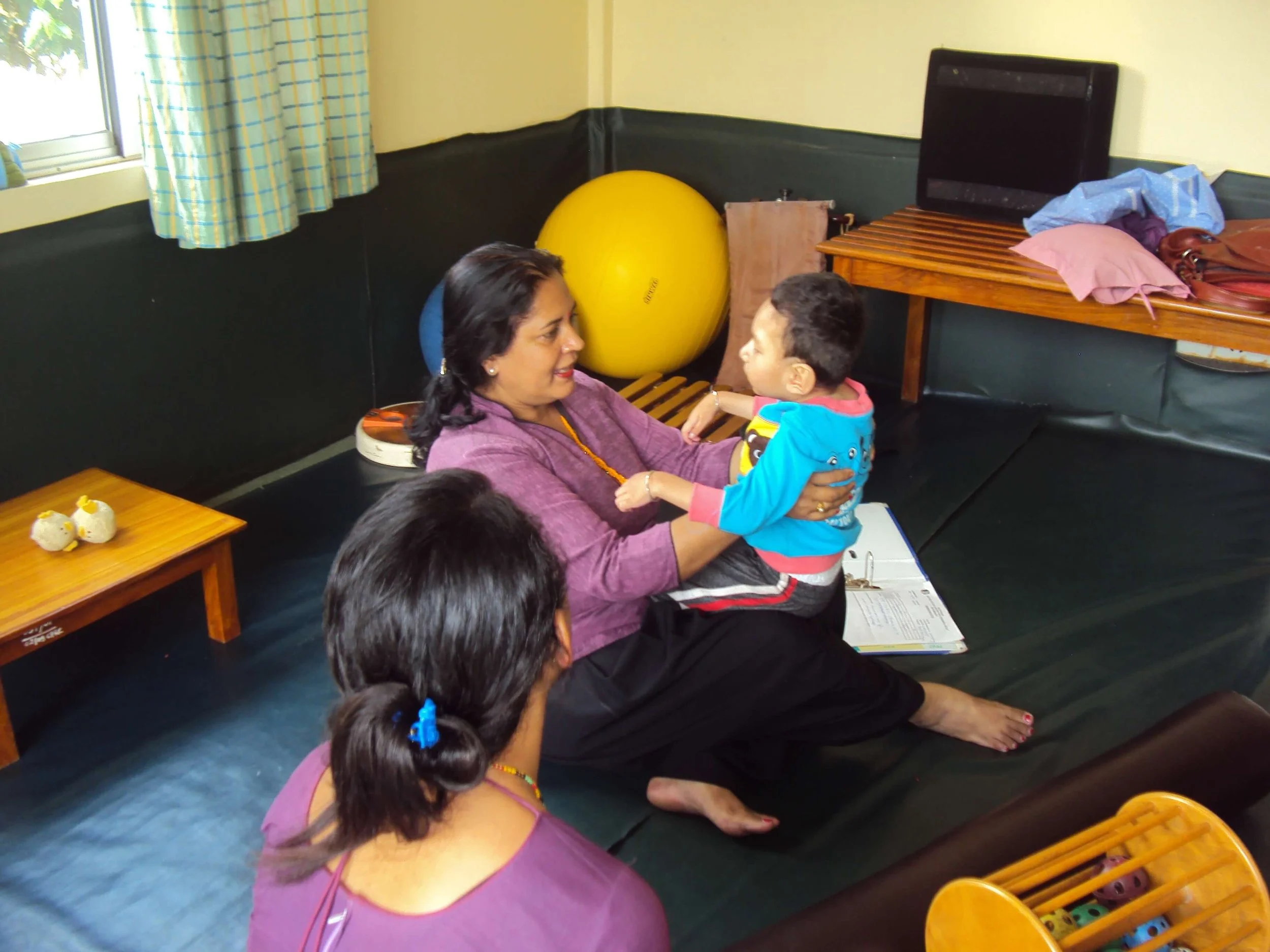
are able to benefit from Cerebral Palsy Nepal’s full range of therapeutic services : physiotherapy, speech therapy, basal stimulation etc,
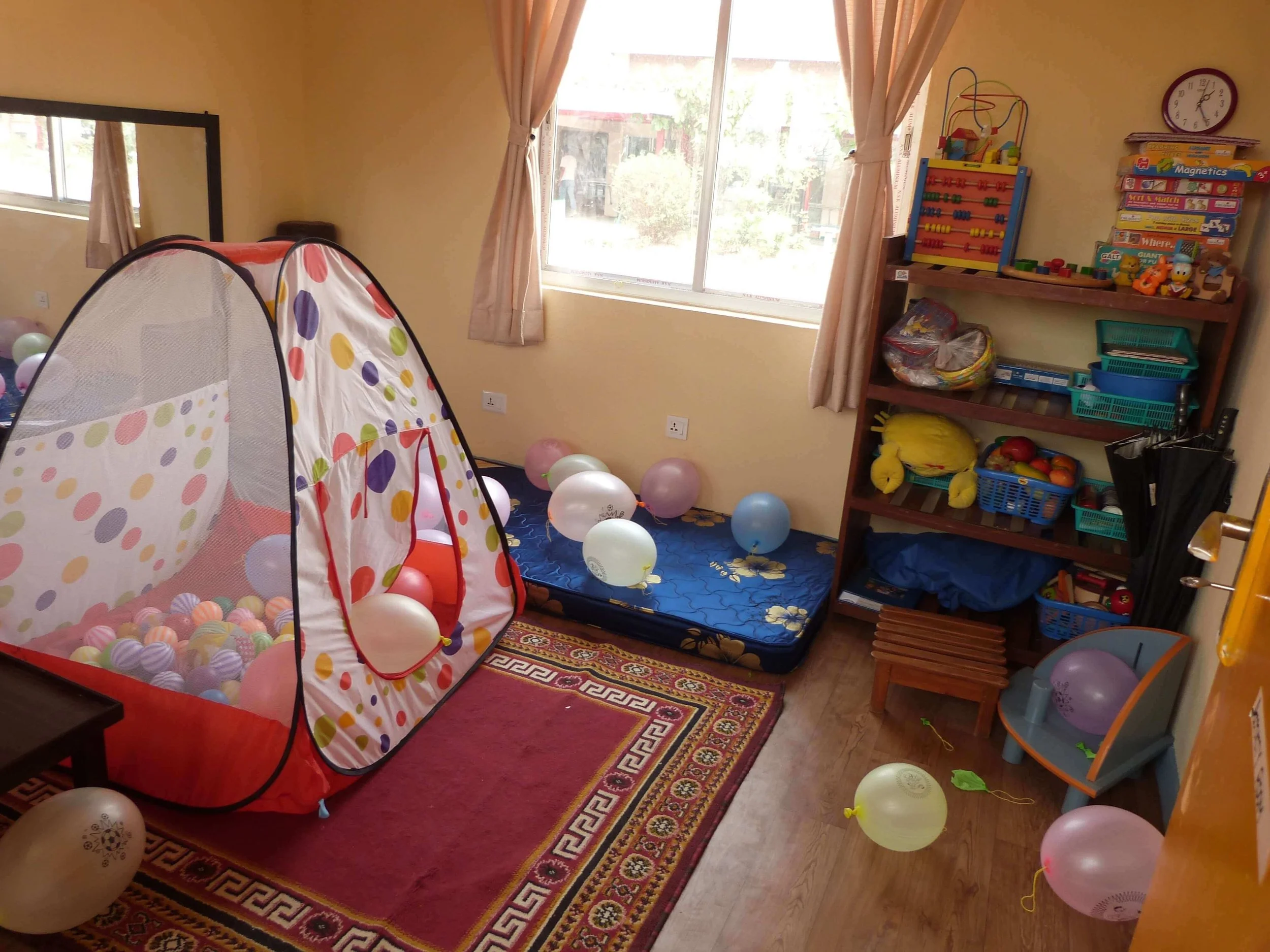
are provided with stimulation and special education programmes, depending on their age and development
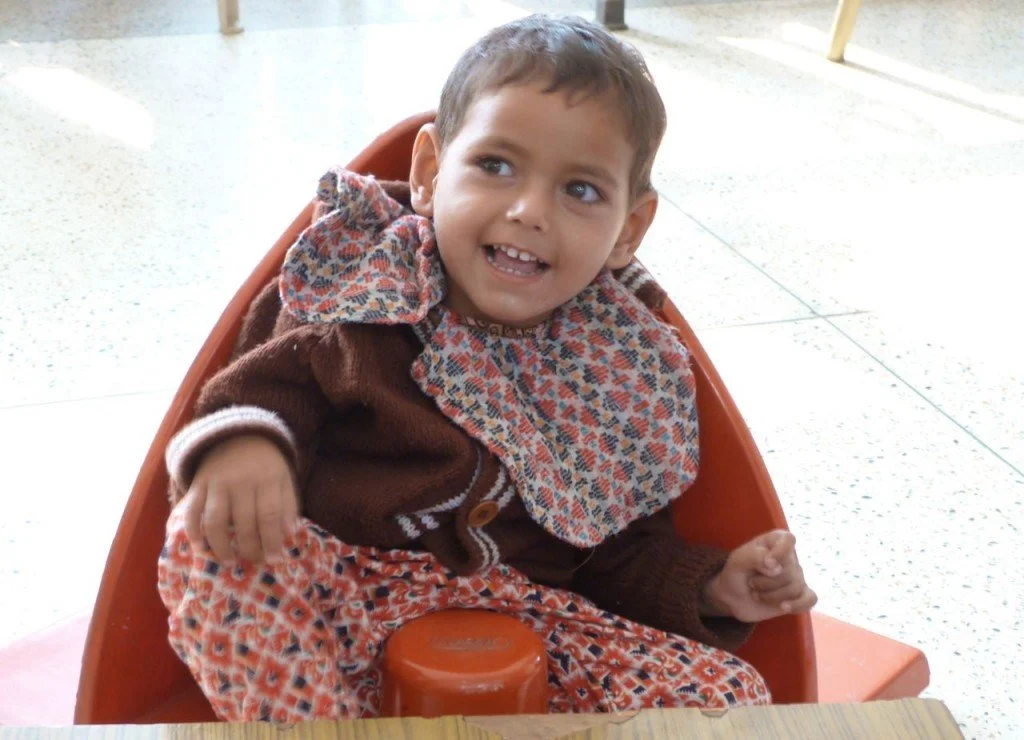
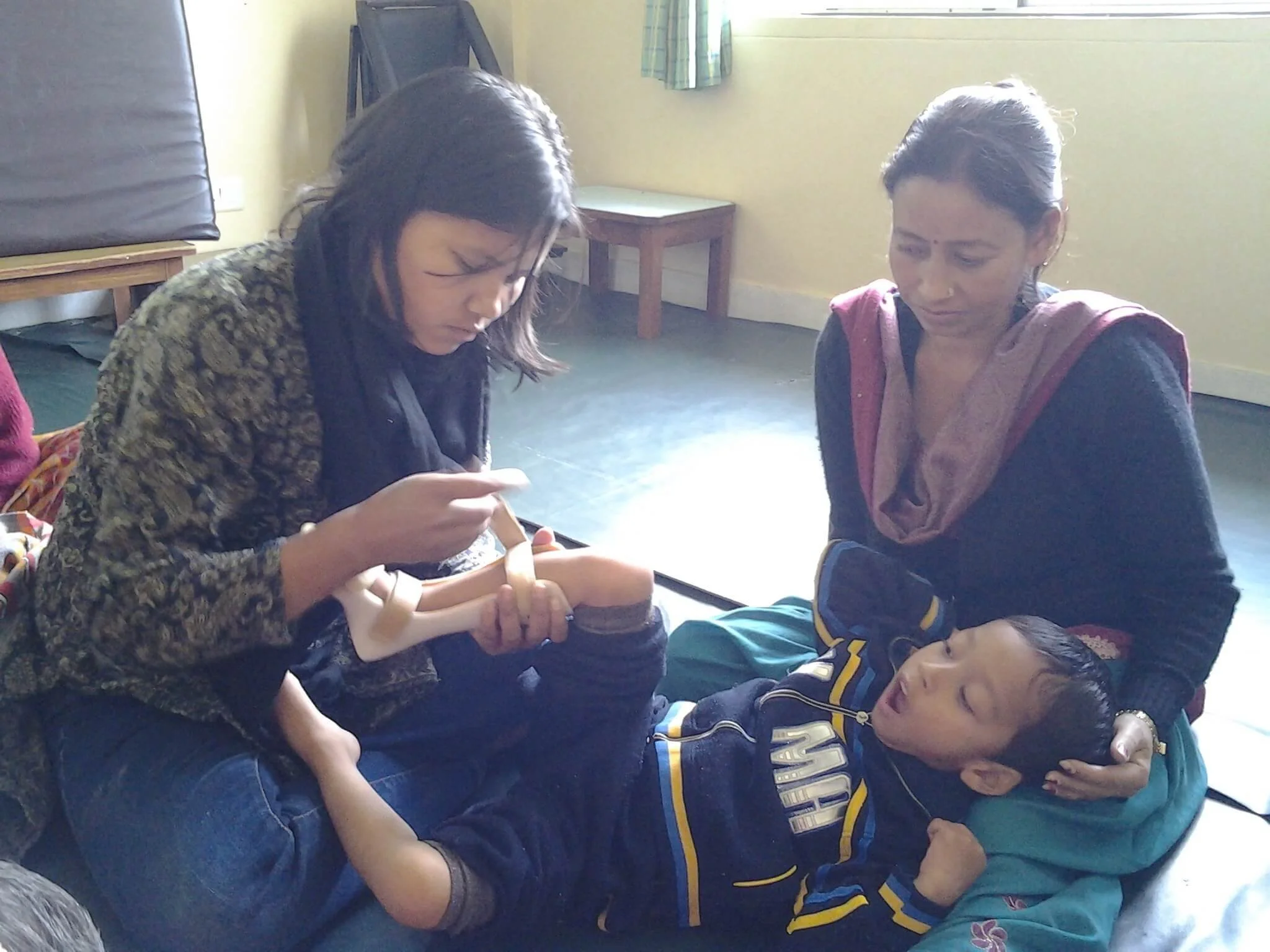
are provided with medication and/or special devices (corner chair, orthesis, etc) as needed
2. Parents
are provided with the knowledge and practical skills that will allow them to best help their child’s development once they return home. This includes :
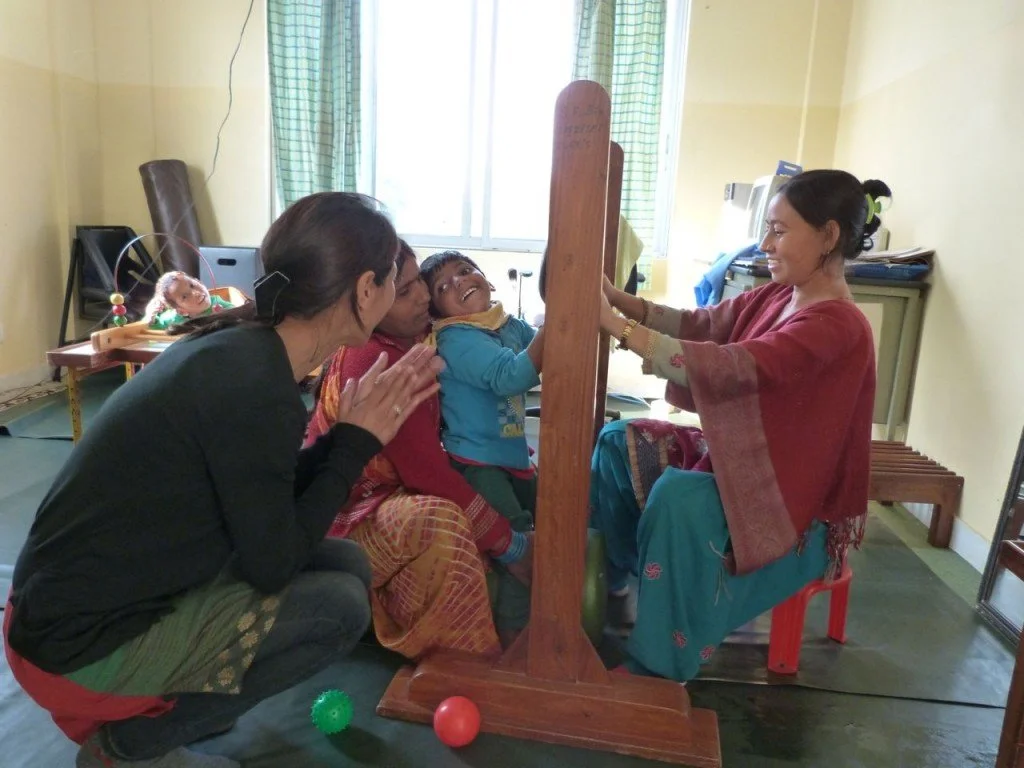
therapeutic intervention : how to handle and stimulate their children
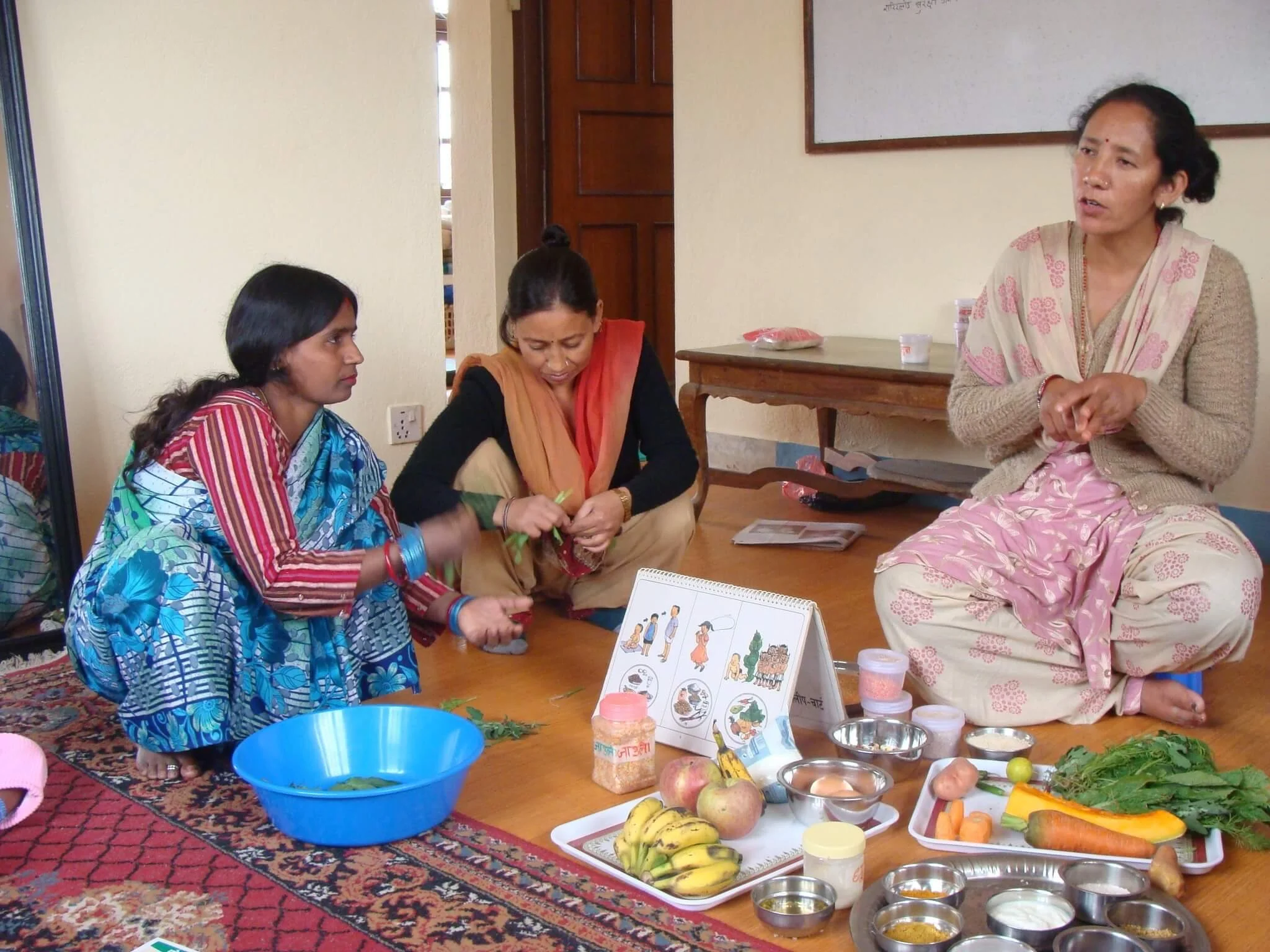
training : nutrition, hygiene, first aid, safe water, burn prevention, income generating activities etc.
networks : where to go for support in their district etc.
Regularly two groups of four children come from two districts, together with their respective home visitor.
3. Responsible Home visitor
joins the programme and follows the children as well as gets further training